How to Treat Hard Water From a Well, Starting With a Water Test
To treat hard water in a well, start with a lab water test that measures hardness, iron, manganese, pH, and sediment. Then match the equipment to the results: a salt-based softener for the hardness, with a sediment filter and an iron filter ahead of it if the test finds iron or particles that would foul the softener’s resin.
How do you confirm your well water is hard, and how hard it is?
Send a sample to a state-certified water testing lab, which gives you a measured hardness figure that a store test strip cannot match. Hardness comes from dissolved calcium and magnesium, and labs report it in milligrams per liter or in grains per gallon. You will need that number later to size a softener, so keep the report.
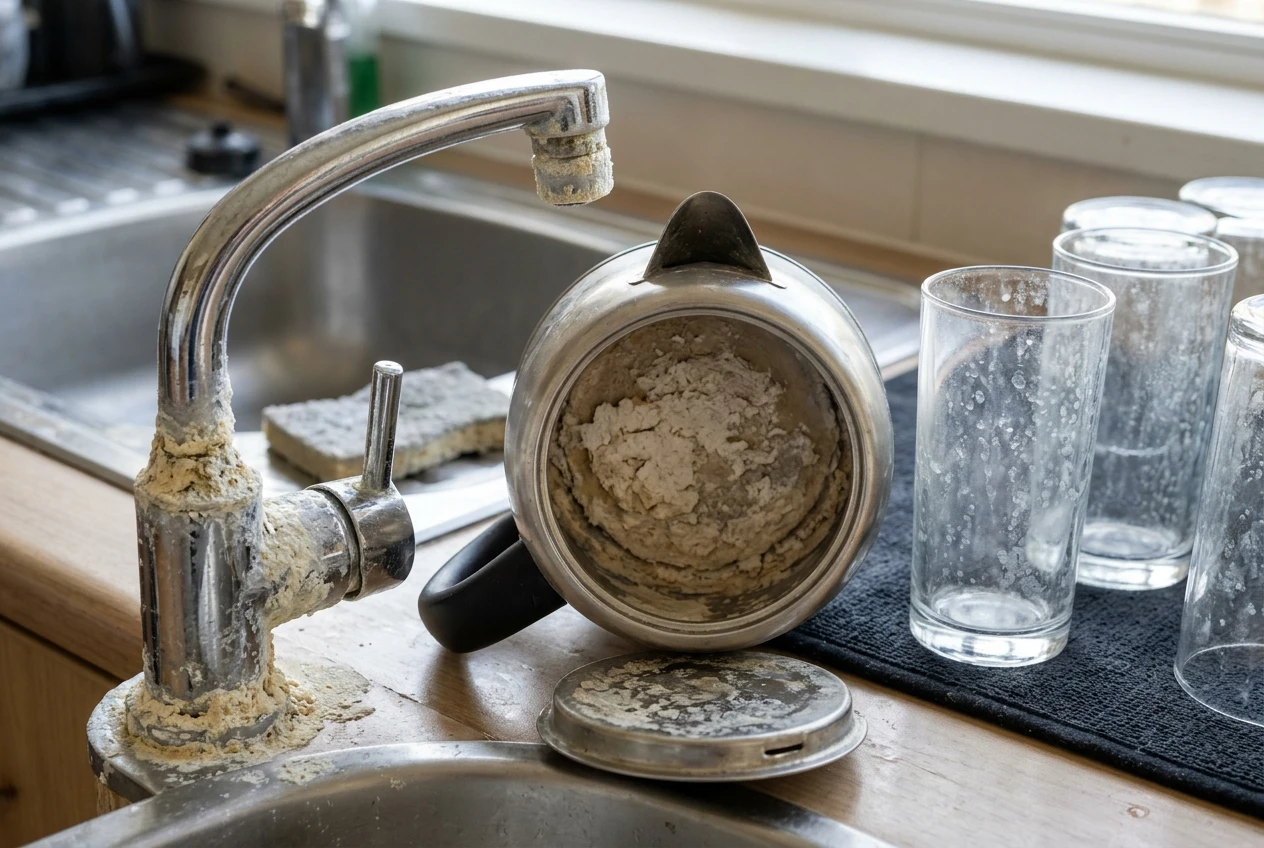
Signs that suggest hard water before you test:
- White, chalky scale on faucets, showerheads, and kettles
- Spots on glassware that return after washing
- Soap that does not lather well and leaves a film
- Scale inside the water heater, which shortens its working life
- Dry-feeling skin and stiff laundry
Visible scale is a reason to test, not a diagnosis. Order a panel that covers more than hardness. Ask the lab for iron, manganese, pH, total dissolved solids, and sulfur (hydrogen sulfide), plus a bacteria test, because each affects which equipment you buy and in what order.
Collect the sample as the lab instructs, usually from a cold tap that bypasses any existing treatment. If a softener or filter is already installed, ask the lab whether to sample before or after it. Retest after any change in taste, smell, or color, and after a flood or nearby construction.
What else in well water can get in the way of softening?
Iron is the most common problem, because it coats the softener’s resin beads and reduces how much hardness they can remove. A softener that works well on hardness alone can lose capacity quickly when iron is in the water. Manganese behaves much the same way.
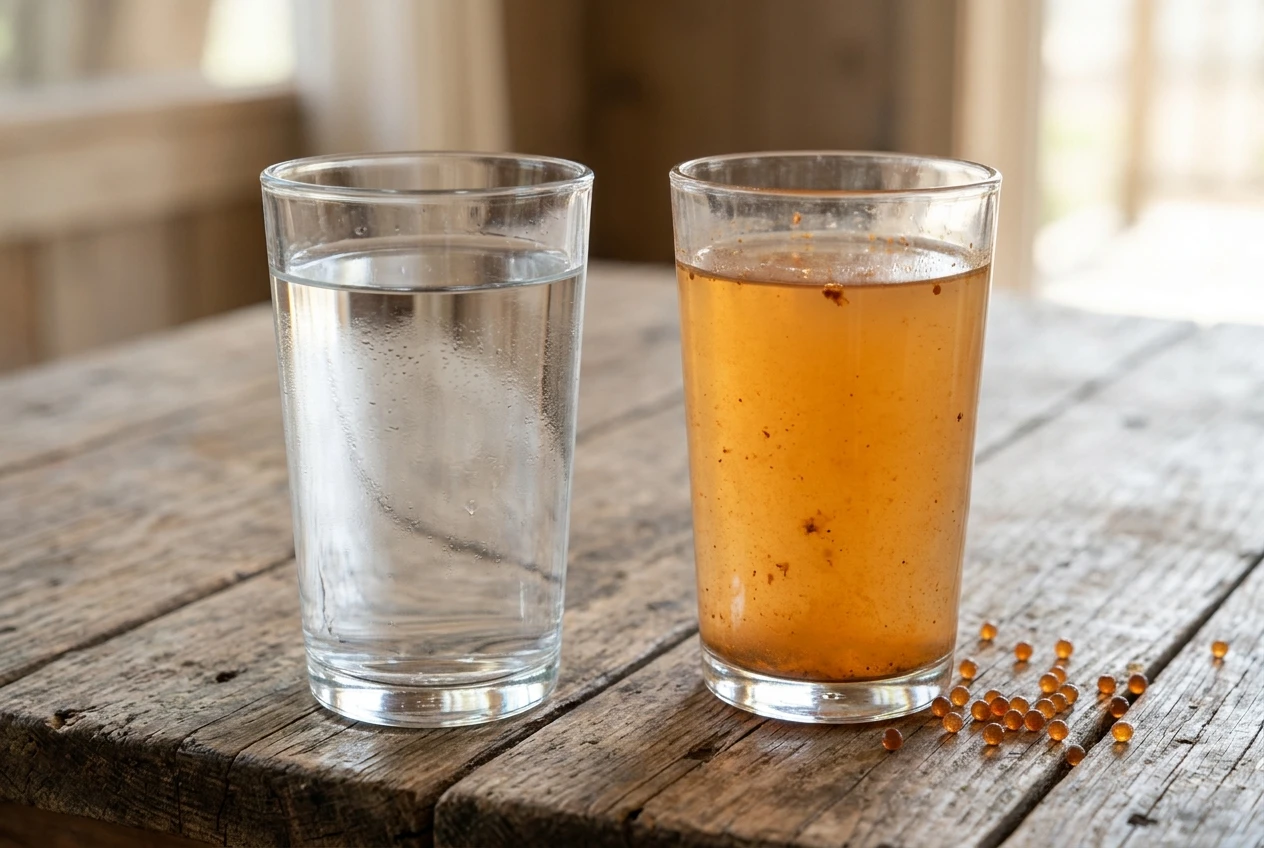
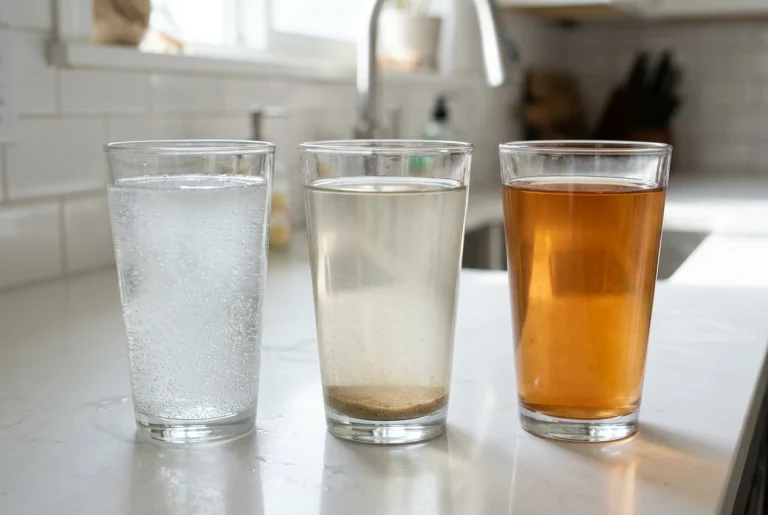
Iron appears in two main forms, and your lab report or a simple glass test can hint at which you have:
- Dissolved (ferrous) iron: The water is clear when drawn, then turns orange or brown after sitting in the air. A softener can handle small amounts, and each manufacturer lists how much its model tolerates.
- Particulate (ferric) iron: The water is rusty-colored when it leaves the tap. This is physical grit that clogs resin and valves, and it needs filtering before the softener.
- Iron bacteria: These produce slimy deposits and a musty or swampy odor. They call for disinfection and are not a softener’s job.
Other things that interfere or need their own treatment:
- Sediment: Sand and silt wear down valves and pack the resin bed, which restricts flow.
- Low pH: Acidic water corrodes pipes and fixtures, and a softener does not correct it.
- Hydrogen sulfide: The rotten-egg smell is not removed reliably by a softener and usually calls for a separate filter.
- Tannins: These give water a yellow or tea color and can foul resin over time.
- Bacteria and nitrates: A softener does not make water microbiologically safe. If your test flags either, address them before anything else.
If your report shows any of these, the softener is not the first purchase. Treating them in the right order protects the softener and gets better results from it.
Which softening options work for a well, and how do they compare?
A salt-based ion exchange softener is the option that actually removes hardness from well water. It swaps calcium and magnesium for sodium or potassium as the water passes through resin beads, then flushes the beads with brine during regeneration. The other options change how scale behaves without removing the minerals.
Option | What it does | Best fit | Watch for |
|---|---|---|---|
Salt-based softener (sodium) | Removes hardness minerals | Hard water that is otherwise fairly clean, or pretreated | Iron and sediment shorten resin life; needs salt and a drain |
Salt-based softener (potassium chloride) | Removes hardness minerals, using potassium instead of sodium | Households that want to avoid adding sodium | Potassium chloride typically costs more than salt |
Salt-free conditioner | Changes scale so it clings less to pipes | Scale control where you do not need truly soft water | Hardness stays in the water, so soap and spotting do not improve the same way |
Twin-tank softener | Keeps one tank in service while the other regenerates | Larger households that need soft water at all hours | Higher equipment cost and more space |
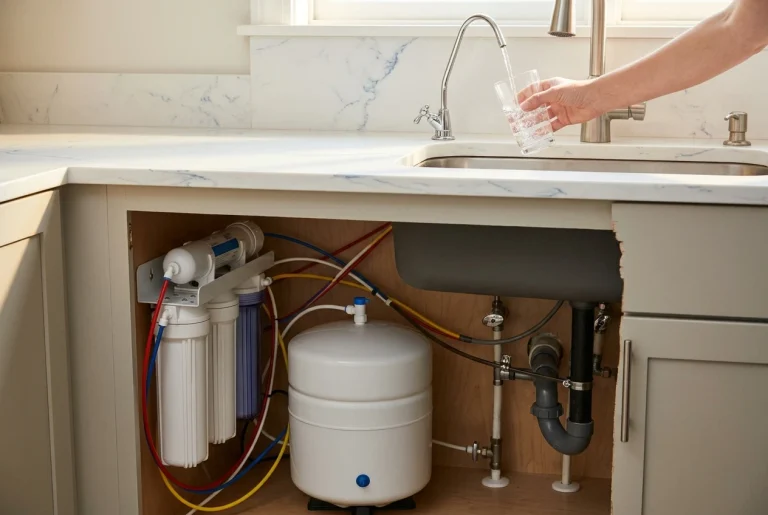
Reverse osmosis at a single tap is a drinking-water option, not a whole-house softening method. It can sit alongside a softener, but it does not replace one.
Be cautious with magnetic or electronic descalers. They are sold as a no-maintenance fix, but they do not remove hardness, and you should look for independent test results before paying for one. For a household that wants noticeably softer water for bathing, laundry, and appliances, an ion exchange softener remains the dependable choice.
What should be installed ahead of the softener?
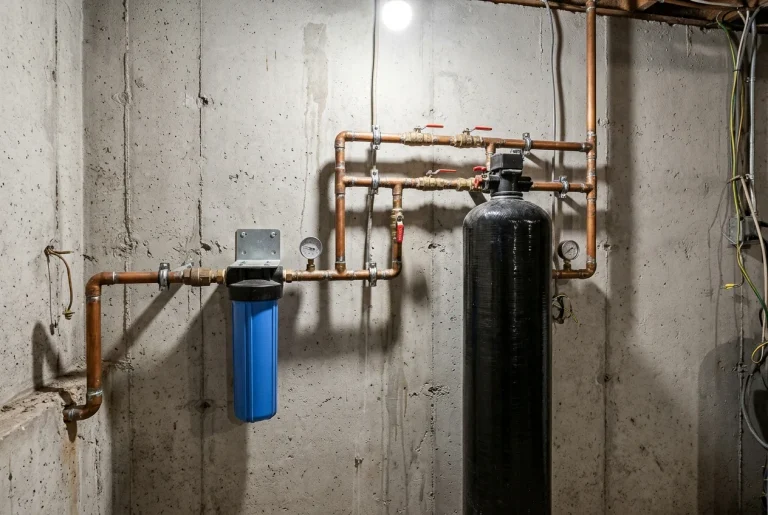
Install pretreatment in the order the water should be cleaned, with the most damaging contaminants removed first. The softener belongs after sediment and iron treatment and before any filter that polishes the water for taste. Our guide on whether to install a water filter before or after the softener covers that sequencing question in more depth.
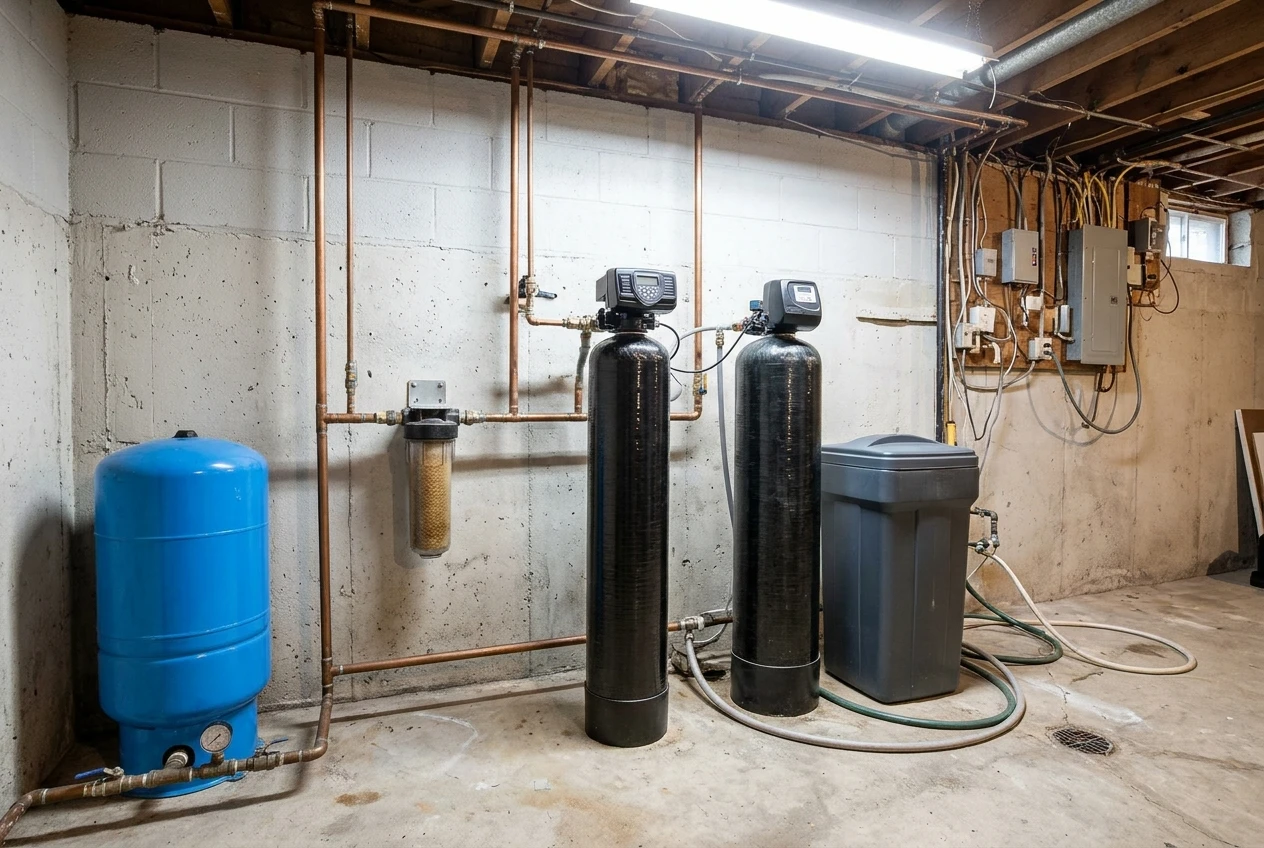
A typical well setup, in order:
- Pressure tank and pump: The treatment equipment goes downstream of the pressure tank so it receives steady pressure.
- Sediment filter: It catches sand, silt, and particulate iron before they reach finer equipment. Replace the cartridge when pressure drops noticeably.
- Iron and sulfur treatment, if the test calls for it: Common approaches oxidize the dissolved iron so it can be filtered out, using air injection, a media filter, or a chemical feed. Pick the method based on your iron and sulfur results and your water’s pH.
- Acid neutralizer, if the pH is low: It raises the pH so the water stops attacking pipes, and it is usually placed before the softener.
- Water softener: It now handles only the hardness it was bought for.
- Carbon filter or ultraviolet (UV) disinfection, if needed: Carbon improves taste and odor, and UV treats bacteria. Both generally sit after the softener, so the water they treat is already clean.
You may need only one or two of these. A well with hard water and little else may need a sediment filter and a softener. A well with hard water, orange staining, and a sulfur smell needs most of the list.
How do you size and install a softener on a well system?
Size the softener from your measured hardness, your household’s daily water use, and any iron the water carries. Many sizing methods add an allowance for iron to the hardness number, because iron uses up resin capacity just as hardness does. Our guide on how to size a water softener walks through that calculation.
Wells add a few considerations that city water does not:
- Flow rate: Regeneration and backwash need a certain flow, and a low-yielding well may not supply it. Compare the softener’s required flow to your pump and well output before you buy.
- Pressure: Well pressure varies with the pressure tank settings, so confirm the softener’s operating range suits yours.
- Drain and discharge: The softener sends brine and backwash water to a drain. If your home uses a septic system, check the manufacturer’s guidance and local rules for where that water can go.
- Bypass: Plumb in a bypass valve so you can service the softener, or water the garden with untreated water, without shutting off the house.
- Outdoor taps: Keep the irrigation line and outdoor spigots on untreated water, since lawns gain nothing from softened water.
For the plumbing itself, our walkthrough on how to install a water softener shows the connections step by step. If your pretreatment equipment includes a chemical feed or air-injection system, have a qualified installer confirm that part, because mistakes there can affect your whole water supply.
What upkeep does a well water softener need?
A well water softener needs regular salt refills, periodic cleaning, and retesting of your water. The tasks are simple, but skipping them is what shortens resin life on a well.
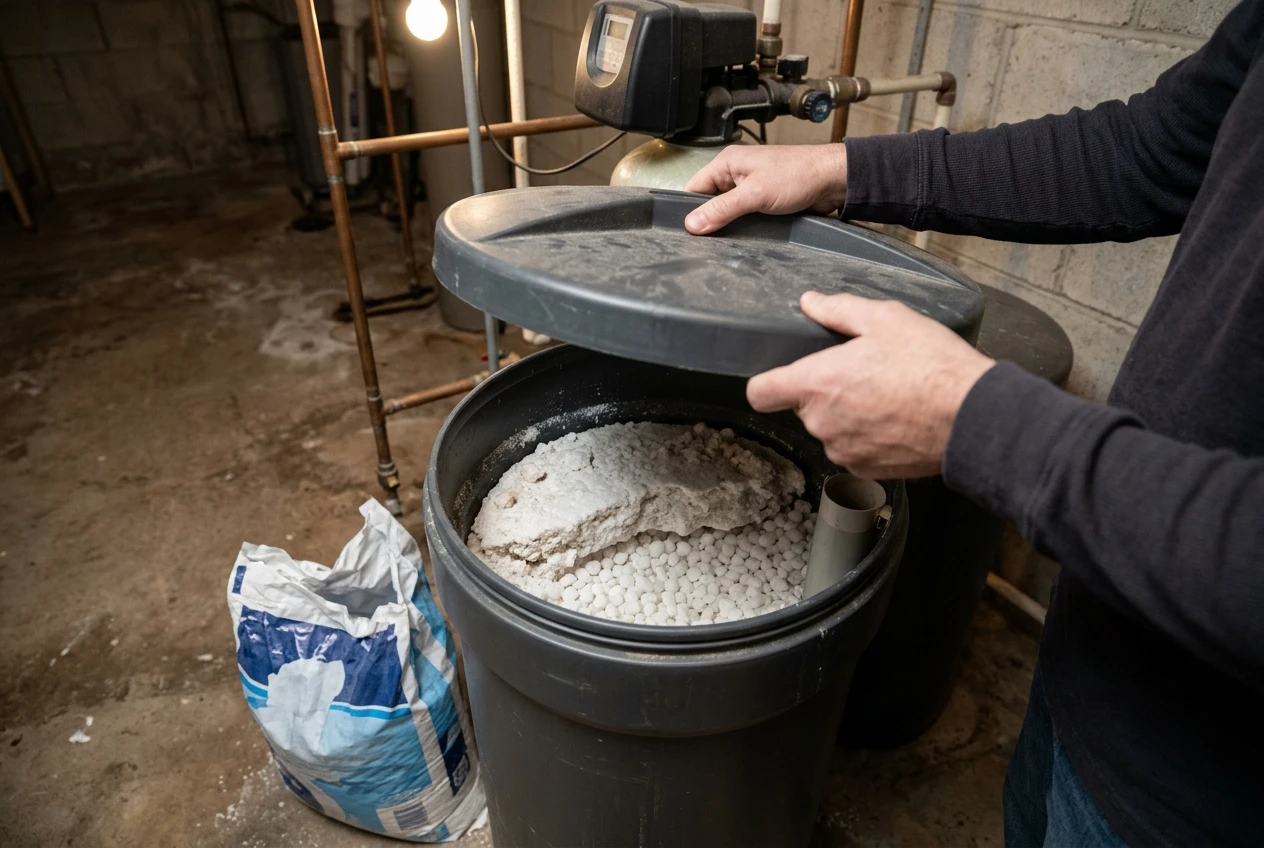
Routine tasks:
- Check the salt level often and refill before the tank runs low. Use the salt grade your manufacturer recommends.
- Look for salt bridges, a hard crust that forms over the brine and stops salt from dissolving. Break it up gently if you find one.
- Use a resin cleaner if your water carries iron, following the product directions, because iron builds up on the beads between regenerations.
- Replace sediment cartridges on schedule so grit does not reach the softener.
- Clean the brine tank when you see sludge at the bottom.
- Retest the water to confirm the softener still delivers soft water and the pretreatment still works.
Rising hardness at the tap, rust-colored water, or a drop in water pressure all point to a problem with the resin bed, a clogged filter, or a setting that needs adjusting. Check the filter and the salt first, because those are the easiest fixes.
Which setup fits which well situation?
Match the equipment to your test results, not to what a neighbor installed. Two wells on the same road can have very different water, so the lab report is the deciding document.
Your test shows | Suggested setup |
|---|---|
Hardness only, water otherwise clean | Sediment filter and salt-based softener |
Hardness and a small amount of dissolved iron | Sediment filter and a softener rated for that iron level, plus regular resin cleaner |
Hardness and noticeable iron or rusty water | Sediment filter, iron filter, then softener |
Hardness and rotten-egg smell | Sulfur treatment ahead of the softener, then a carbon filter if needed |
Hardness and low pH | Acid neutralizer ahead of the softener |
Hardness and positive bacteria result | Disinfection (such as UV) after the softener; resolve the source if possible |
Scale concern but no need for truly soft water, and no iron problem | Salt-free conditioner |
Low-yield well | Check the softener’s flow requirements against the well and pump before choosing a model |
If your results do not fit neatly into one row, treat the problems in the order the water travels: particles first, then iron and sulfur, then pH, then hardness, then disinfection and taste.
Pair your softener with the right filtration: read our Whole House Water Filters guide to see what can sit alongside it.