Do You Need a Whole House Water Filter, or Is a Point-of-Use Filter Enough?
A whole house water filter is worth it when the problem shows up at every tap, such as chlorine taste and odor, sediment, or iron in well water. A filter at the sink is enough when the concern is drinking water only, such as lead or fluoride. Many homes end up using both.
Is a whole house water filter worth it for your home?
It is worth it when the problem affects every tap, shower, and appliance in the house, not only the glass you drink from. A whole house system treats water where it enters the home, so everything downstream gets the same treatment.
These problems usually call for a whole house system:
- Sediment, sand, or cloudiness that clogs faucet screens and appliance valves
- Chlorine taste and odor in city water that you also notice in the shower or the laundry
- Iron staining on fixtures, sinks, and laundry
- Any contaminant you want reduced at every outlet, not just the kitchen
These problems usually call for a filter at one tap:
- Lead, which you are concerned about mainly through drinking and cooking
- Fluoride, if you want to reduce it in your drinking water
- A taste issue you only care about in the glass
The deciding question is where the water touches you. If you only swallow the contaminant, treating every gallon that goes to the washing machine and the toilet adds cost without adding much benefit. If the water damages plumbing, stains fixtures, or bothers you in the shower, treating it at the entry point makes sense.
Before you buy anything, find out what is actually in your water. City water customers can read their utility’s annual water quality report. Well owners need a lab test, because a private well is not monitored for you. Buying a system without test results is how people end up with the wrong filter.
Why does tap water taste bad, and will a whole house filter fix it?
Tap water usually tastes bad because of chlorine or chloramine used for disinfection, sulfur compounds, or dissolved minerals and metals, and a whole house filter with activated carbon can reduce many of these tastes and odors. The result depends on the filter media and on what is causing the problem.
Here is how the common causes break down:
Cause | What you notice | What addresses it |
|---|---|---|
Chlorine or chloramine | Pool-like smell and taste | Activated carbon filtration |
Sediment and particles | Cloudy water, grit | Sediment filter |
Iron | Metallic taste, orange or brown stains | Treatment designed for iron |
Hydrogen sulfide | Rotten egg smell, mostly in well water | Treatment designed for sulfur |
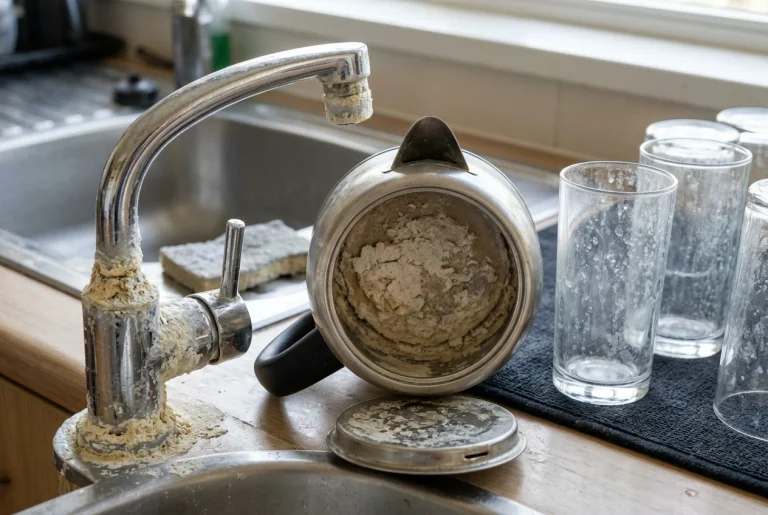
Hard water minerals | Scale, spotty dishes, a flat or chalky taste | Water softener or other scale treatment |
A carbon-based whole house filter is the usual answer to chlorine taste because it improves water at every tap at once. It does not soften water, though. If your real problem is scale, read our guide on how to treat hard water in a well, which starts with a water test.
Sediment is the other common reason to filter at the entry point. If your well water looks cloudy, our article on how to remove sediment from well water explains which filtration stage handles it.
One caution: a smell you cannot pin down is a reason to test, not to guess. A filter chosen for the wrong cause will not fix the taste, and you will have spent money on hardware that does nothing for the real issue.
Do water filters remove lead and fluoride?
Some water filters remove lead and some reduce fluoride, but the filter has to be built and certified for that specific contaminant. A general whole house carbon filter is not automatically either one.
Lead
Lead in household water often comes from old service lines, solder, or fixtures inside the home. That means it can enter the water after the point where a whole house filter sits, in the pipes between the filter and the tap. A filter at the kitchen faucet treats the water right before you drink it, which is why a point-of-use filter is the usual tool for lead.
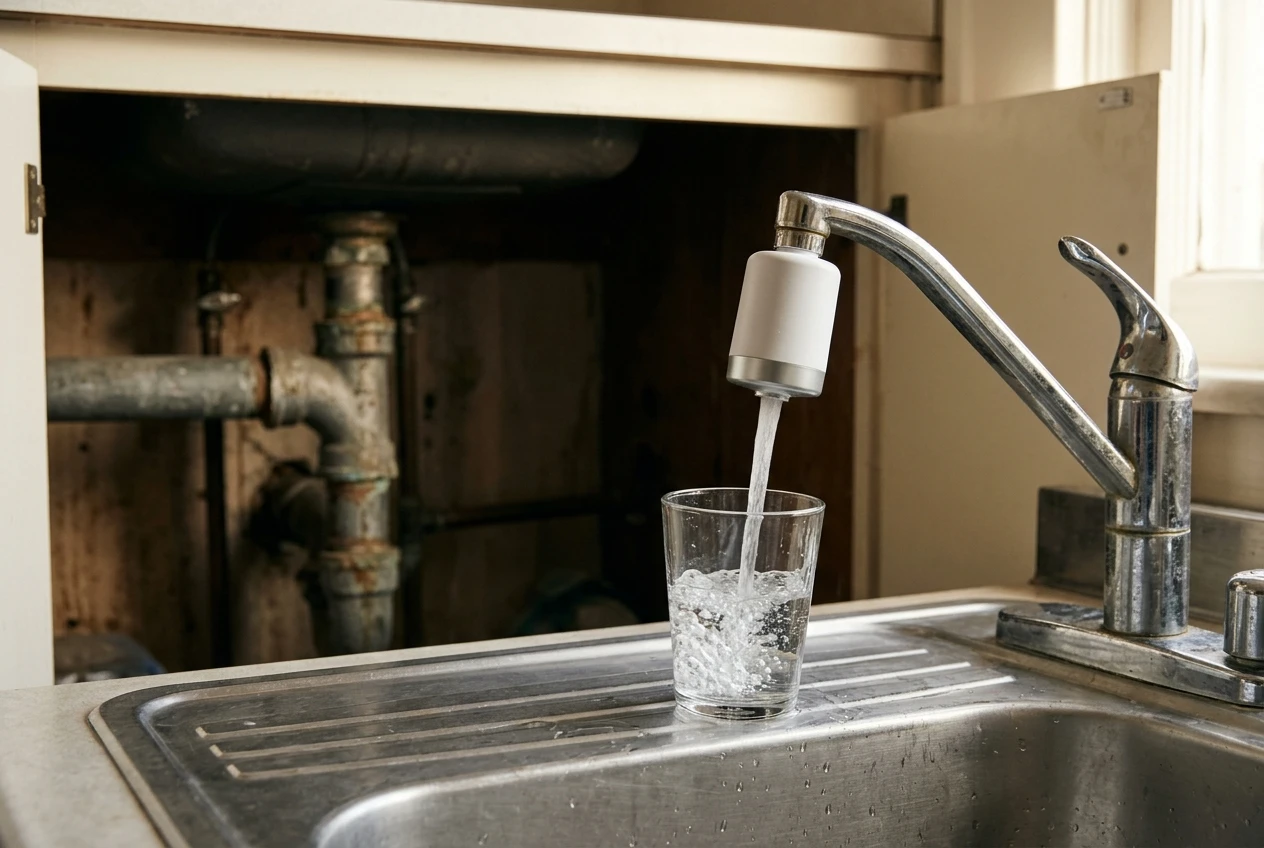
Look for a filter that is certified to reduce lead, and read the certification on the product’s spec sheet rather than relying on marketing language. If you want an inexpensive way to start, our article on pitcher water filters that remove lead covers options that carry that claim.
Fluoride
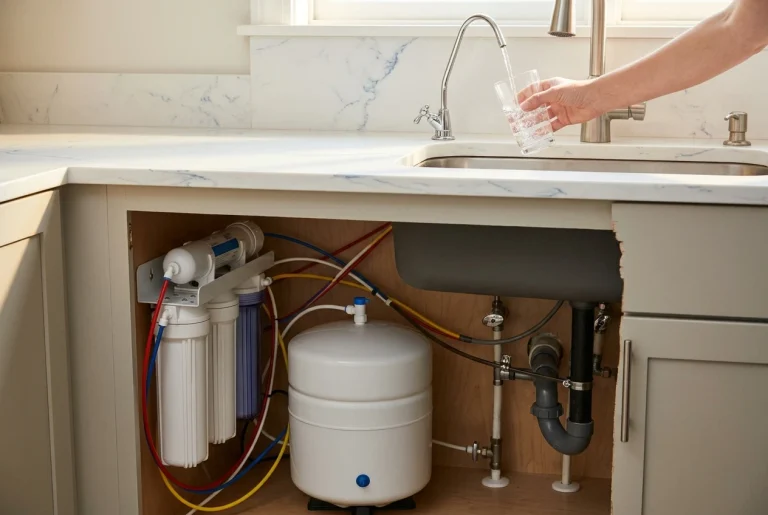
Fluoride is a dissolved ion, and ordinary carbon and sediment filters do not remove it. Reverse osmosis is the common method for reducing it at a single tap. Treating fluoride for an entire house is rarely practical, and since most people care about it only in drinking and cooking water, a sink-level system is the sensible choice.
If you are considering reverse osmosis for this, see our review of best residential reverse osmosis systems.
Whatever your concern, check what the filter is certified to reduce. A product that says it improves taste has not necessarily been tested for lead or fluoride.
Do you still need a drinking water filter at the sink?
Often yes. A whole house filter is built for flow and broad coverage, while a drinking water filter is built to treat a small amount of water more thoroughly.
Several situations call for a second filter at the sink:
- You want lead or fluoride reduced. As covered above, these are usually handled at the point of use.
- Your whole house system is a sediment or basic carbon unit. It protects plumbing and improves taste, but you may want more treatment for the water you drink.
- Water picks up contaminants in your home’s plumbing. A filter at the tap treats what the pipes add after the entry point.
A reasonable pairing is a whole house filter that handles sediment and chlorine for the whole home, plus a certified filter at the kitchen tap for drinking and cooking water. The first protects plumbing, fixtures, and appliances. The second is aimed at what you actually consume.
You may not need both. If your test results show only a problem that affects drinking water, a sink filter alone can be the full answer. Our guide to the best filter for drinking water can help you narrow the choice, and the under counter filters that are not reverse osmosis are a good fit if you want something installed out of sight.
How do you choose a whole house water filter system?
Start with your water test results, then match the filter media to the problem, then check flow rate and certifications. Follow these steps in order:
- Get a test. City customers can use the utility’s water quality report. Well owners need a lab analysis. Write down the specific contaminants and their levels.
- Name the problem. Sediment, chlorine, iron, sulfur, and hardness each need different treatment. One cartridge rarely handles all of them.
- Match the media to the problem. Sediment filters catch particles, activated carbon handles chlorine taste and odor, and iron or sulfur typically need treatment designed for those compounds.
- Check the flow rate. A system that cannot keep up with your household’s demand lowers water pressure when several fixtures run at once. Compare the rated flow with how many bathrooms and appliances you run.
- Look at certifications. Confirm that the claims you care about are backed by independent certification, not only by the manufacturer’s description.
- Check replacement costs. The cartridges or media you will buy for years matter as much as the purchase price. Confirm that replacements are easy to find.
- Plan for the install. Make sure you have space near the main line and decide whether you will do the plumbing yourself or hire a plumber.
If you already have or plan to add a softener, the order of equipment matters. Our article on whether to install a water filter before or after the softener walks through the common arrangements.
For specific product picks, use the whole house roundup linked at the end of this article. It covers the models in detail, so this piece does not repeat it.
How does installing a whole house filter compare with an under sink filter?
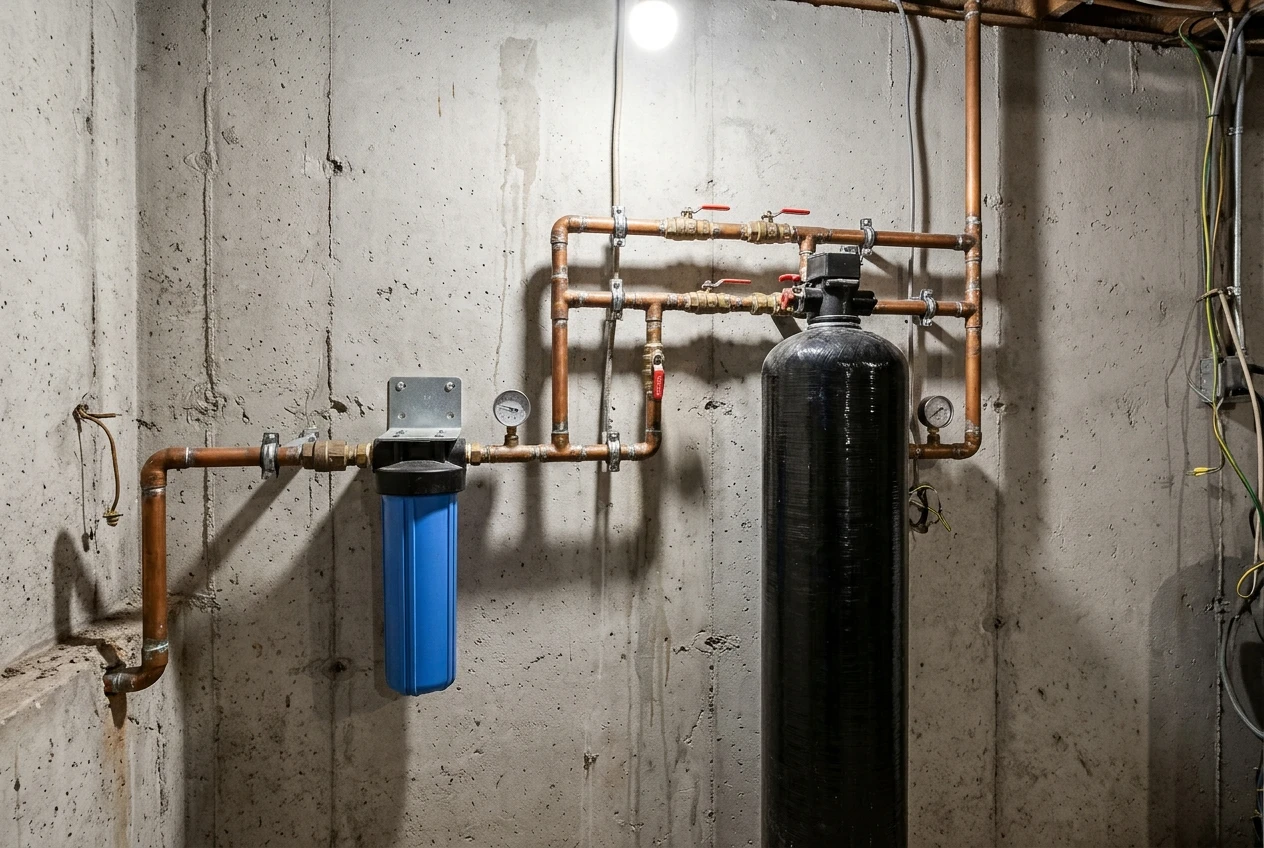
A whole house filter installs on the main water line and usually involves cutting into the plumbing, while an under sink filter connects to a single cold water line in a cabinet and is the easier job. The locations explain most of the differences.
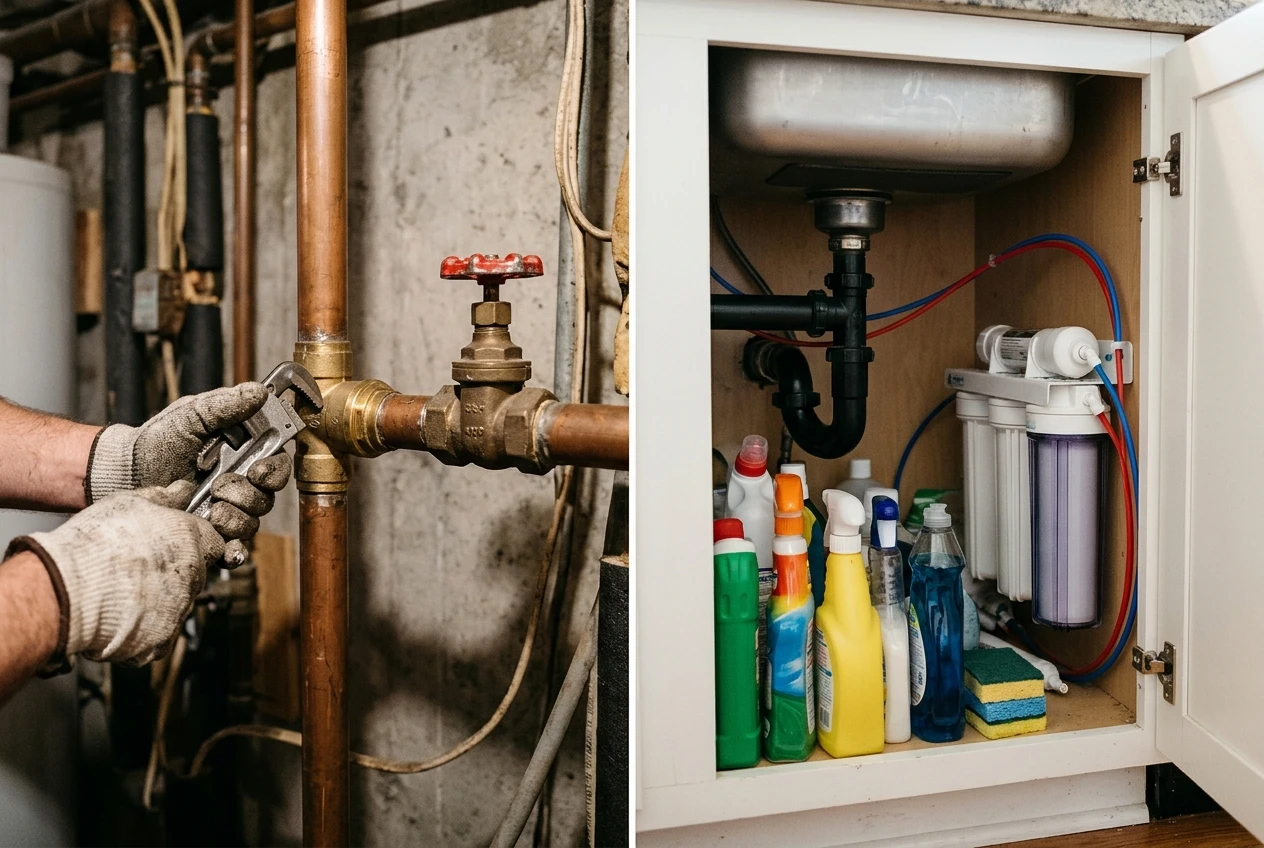
| Whole house filter | Under sink filter |
|---|---|---|
Where it goes | On the main line where water enters the home | In the cabinet under one sink |
What it treats | Every tap, shower, and appliance | One faucet |
Plumbing work | Cuts into the main line, often with a bypass valve | Connects to one supply line |
Space needed | Wall or floor space near the main shutoff | Cabinet space |
Best for | Sediment, chlorine, iron, and whole home protection | Drinking and cooking water, lead, fluoride |
Typical installer | Plumber or experienced DIYer | Many homeowners can do it themselves |
Because a whole house system ties into the main line, a mistake can affect water to the whole home, and you will shut off the supply while you work. Many homeowners hire a plumber for this job, especially if the main line is hard to reach or the pipes are older. An under sink unit is lower stakes: if a fitting leaks, the leak is small and easy to spot in the cabinet.
Check local plumbing codes and any requirements for backflow or bypass valves before you start. If you are unsure about any part of the main line work, a licensed plumber is the safer option.
How often do you change a whole house water filter?
Change it on the schedule the manufacturer gives for your specific model, and sooner if your water is heavy with sediment or you use a lot of water. There is no single interval that fits every system, because the rated capacity depends on the cartridge and on how dirty your water is.
Cartridges are typically rated by time, by volume of water treated, or both. Whichever limit you reach first is when to replace it. A household with many people uses more water and reaches the limit faster than a small household on the same system.
Watch for signs that a filter is spent:
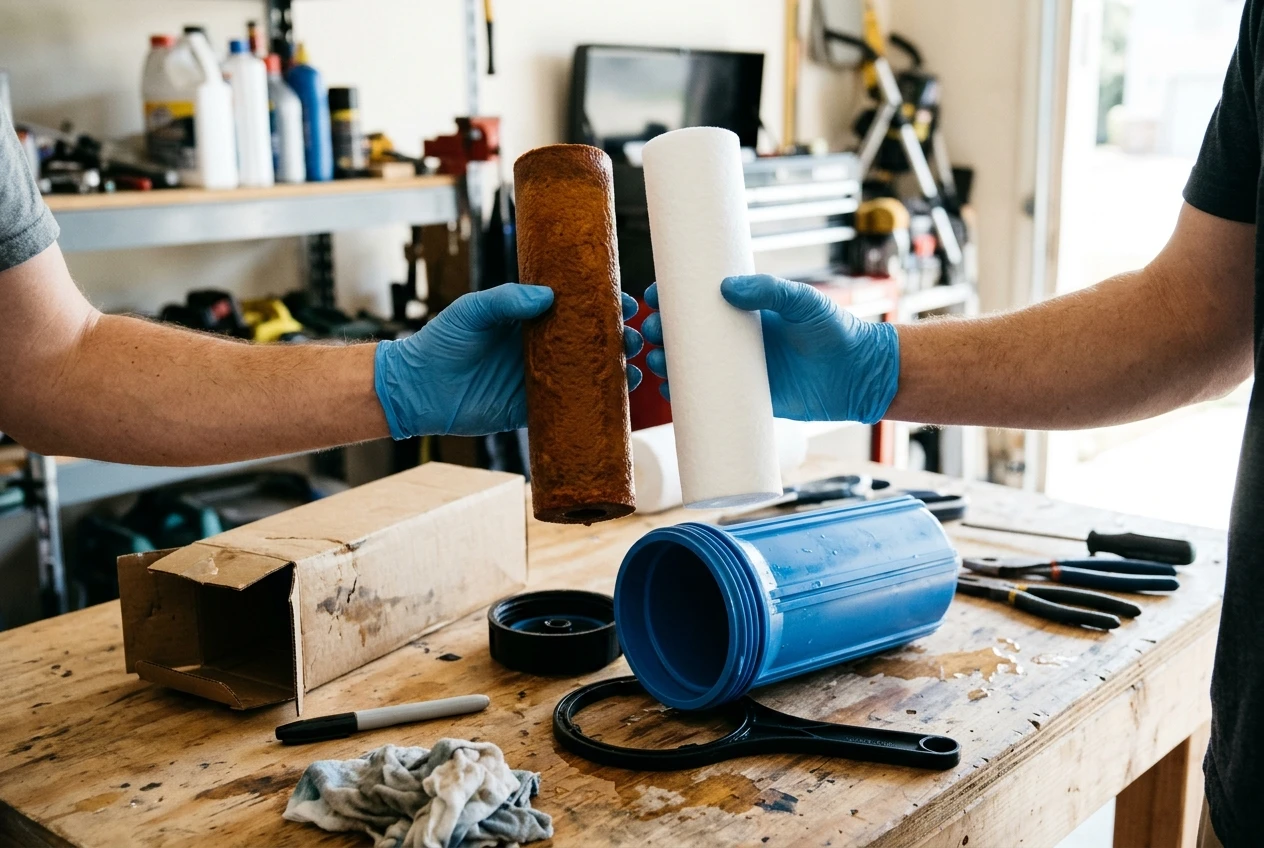
- Water pressure drops at several fixtures
- The chlorine taste or odor returns
- Sediment or discoloration begins to appear again
- Flow slows noticeably after the filter housing
A sediment stage clogs first in water that carries a lot of particles, so a well with cloudy water may need more frequent changes than city water on the same system. If your system has a sediment pre-filter ahead of a carbon filter, the pre-filter protects the carbon and is often replaced more often.
Two habits make this easier. Write the install date on the housing or the cartridge when you change it, and keep a spare cartridge on hand so a clogged filter never becomes a reason to run without one. A filter that has passed its rated life no longer does its job and can reduce flow, so replacing it on time protects both your water quality and your pressure.
Ready to match a system to your water? Read our Water Filter Buying Guide, or go straight to our whole house picks.