How to Remove Sediment and Cloudiness From Well Water
To remove sediment from well water, confirm the cloudiness is made of particles, then install a sediment filter on the main line where water enters the house, after the pressure tank and before every other appliance. Test the water first if the change was sudden or the water smells or tastes off.
How do you remove sediment from well water, step by step?
You remove sediment by following six steps in order, and the first and last are about checking, not filtering.
- Fill a clear glass and let it sit to see what the cloudiness is.
- Look at the color and note when the water gets worse, such as after rain or after the pump starts.
- Test the water if anything points to a contaminant other than plain particles.
- Choose a filter type: cartridge, spin-down or backwashing.
- Install it on the main line, after the pressure tank and before the water heater, softener and any other treatment.
- Watch the pressure and appearance of the water, and change or flush the filter before it clogs.
The sections below cover each step.
What is turbidity, and how is it different from sediment?
Turbidity is how cloudy water looks, and sediment is one of the things that can cause it. Fine particles of clay, silt, sand and rust scatter light as they float, which makes clear water look hazy or muddy.
The distinction matters because cloudy water is a symptom, not a diagnosis. Sediment is a physical particle that a filter can catch. Cloudiness can also come from dissolved air, from minerals that precipitate when water is exposed to air, or from contamination that a particle filter will not touch. A sediment filter clears up the first cause and does nothing for the others.
Is it sediment, or something else making your water look cloudy?
The quickest way to tell is a glass test: fill a clear glass from a cold tap, set it on the counter and watch it.
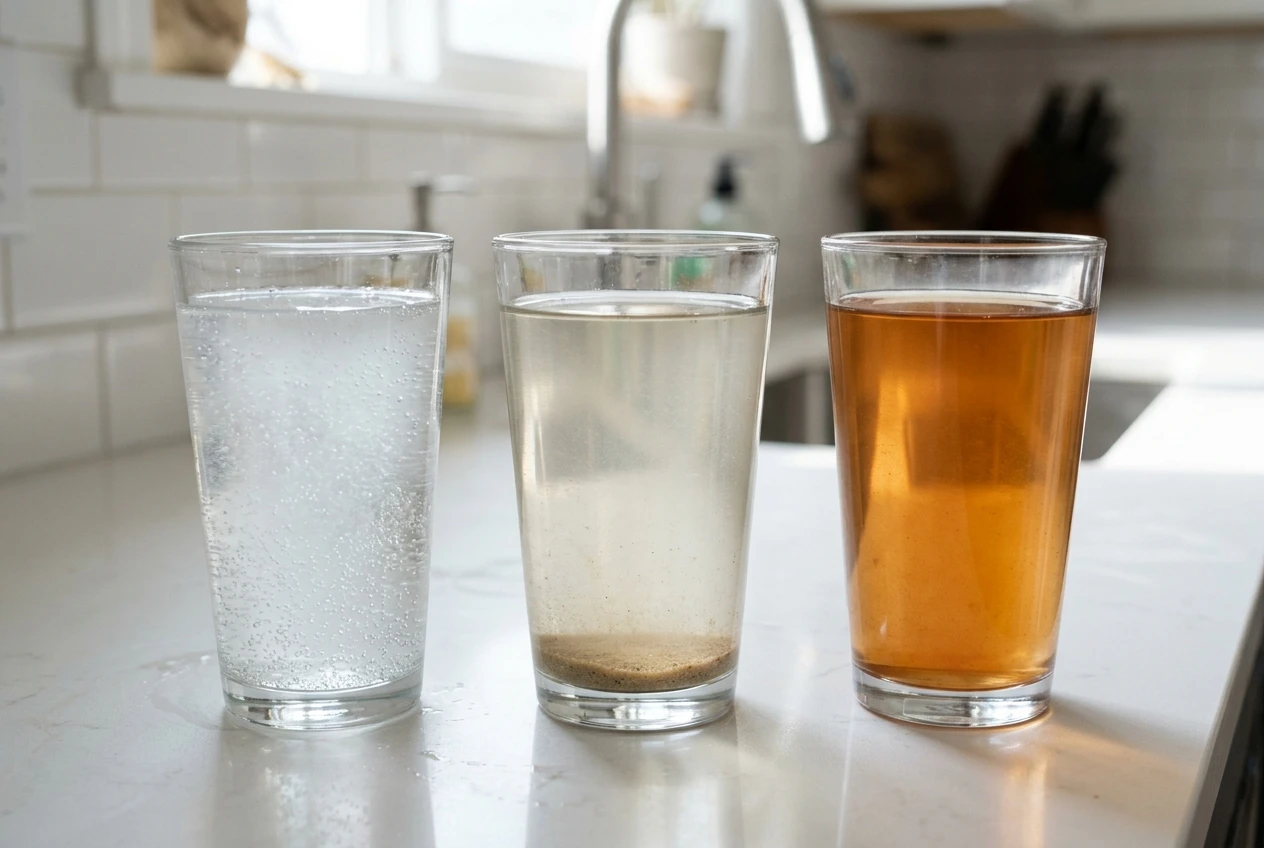
- Cloudiness that clears from the bottom up is usually air. Tiny bubbles rise and the water turns clear. This is generally harmless and does not need a sediment filter.
- Particles that sink and settle on the bottom are sediment. Sand and grit settle fast, while fine silt and clay take longer.
- Cloudiness that never settles can be very fine particles, or something dissolved or suspended that a standard sediment filter may not catch. This is a good reason to test.
Color gives more clues:
- Red, orange or rusty brown often points to iron, either as particles or dissolved iron that turns rusty after it meets air.
- Black specks or a dark tint can point to manganese.
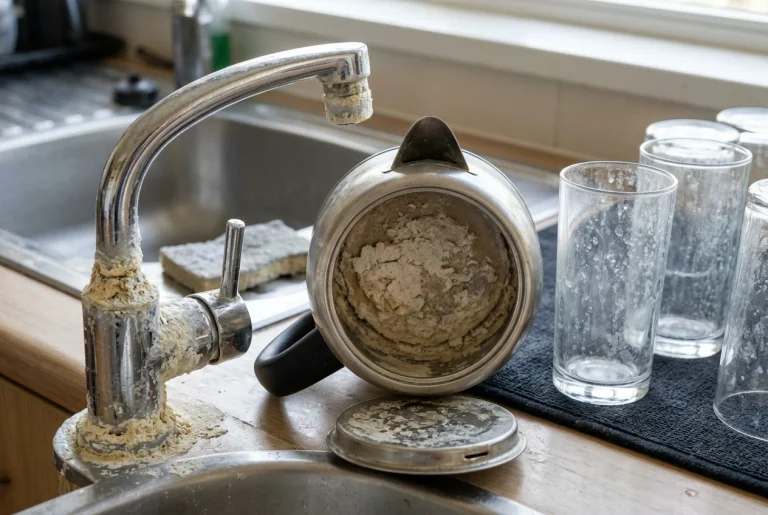
- A milky white that settles may be mineral content or air, and a white crust on fixtures points to hard water, which has its own treatment.
- A rotten egg smell is a separate problem from sediment and calls for its own diagnosis.
Also notice the pattern. Water that turns cloudy right after heavy rain, flooding or well work behaves differently from water that has been slightly gritty for months. Sand or grit that appears suddenly and keeps appearing can mean a problem with the pump or well components, which a well contractor should inspect. A filter will hide that problem, not fix it.
Which type of sediment filter fits a well: cartridge, spin-down or backwashing?
Choose by how much sediment your water carries: cartridge filters suit light to moderate loads, spin-down filters suit sand and grit, and backwashing filters suit heavy loads.
Filter type | How it works | Best for | Maintenance |
|---|---|---|---|
Cartridge | Water passes through a replaceable filter element inside a housing | Light to moderate sediment, fine particles, a final polish | Replace the cartridge when it clogs or discolors |
Spin-down | A screen catches particles, which collect in a chamber you flush out | Sand and coarse grit, often as a first stage ahead of a cartridge | Open the flush valve to rinse out the trapped material |
Backwashing | A media bed traps particles, then reverses flow on a schedule to rinse itself | Heavy or constant sediment loads on a whole house system | Mostly automatic, with periodic checks of the valve and drain |
A cartridge housing is the simplest and least expensive place to start. Its weakness is that heavy sediment clogs it quickly, which means frequent changes and falling water pressure.
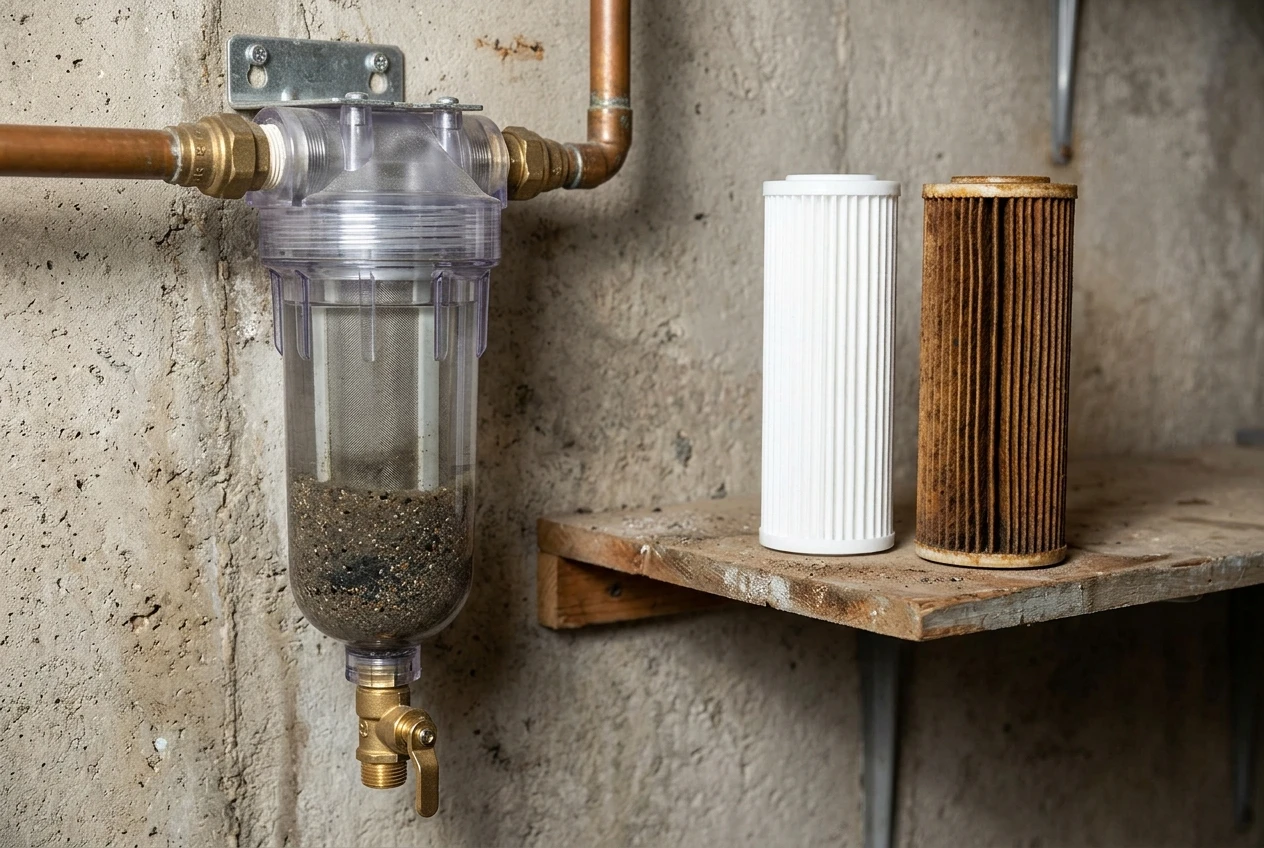
If your water brings in visible sand or grit, a spin-down filter in front of a cartridge filter takes the heavy particles first, so the cartridge lasts longer. A backwashing filter makes sense when sediment is a constant, large-volume problem and you want to avoid changing cartridges often. It needs a drain line for the rinse water, so confirm you have one before choosing it.
Cartridges also come in different porosity ratings, and a finer cartridge catches smaller particles but clogs sooner. The product listing or manufacturer will state the rating. Many homeowners use a coarser cartridge first and a finer one second.
Where should a sediment filter go in your plumbing?
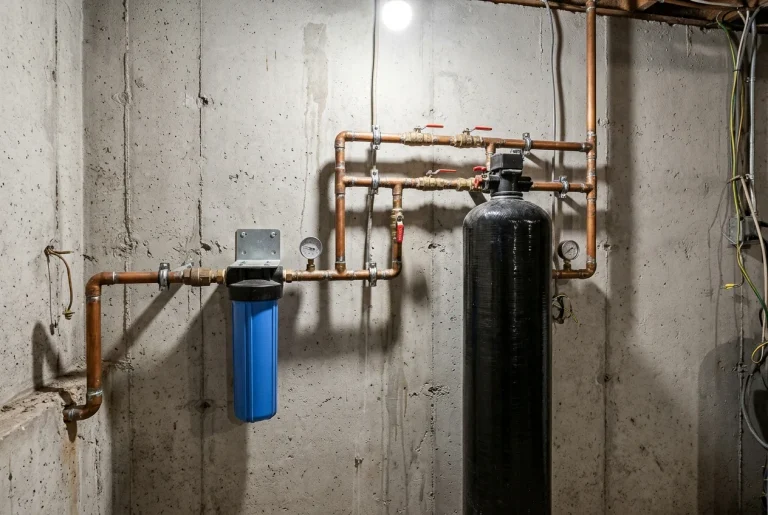
Put the sediment filter on the main water line where it enters the house, after the pressure tank and before everything else that uses water. On a well, that means the filter protects the water heater, the softener, other filters, the faucets and the appliances.
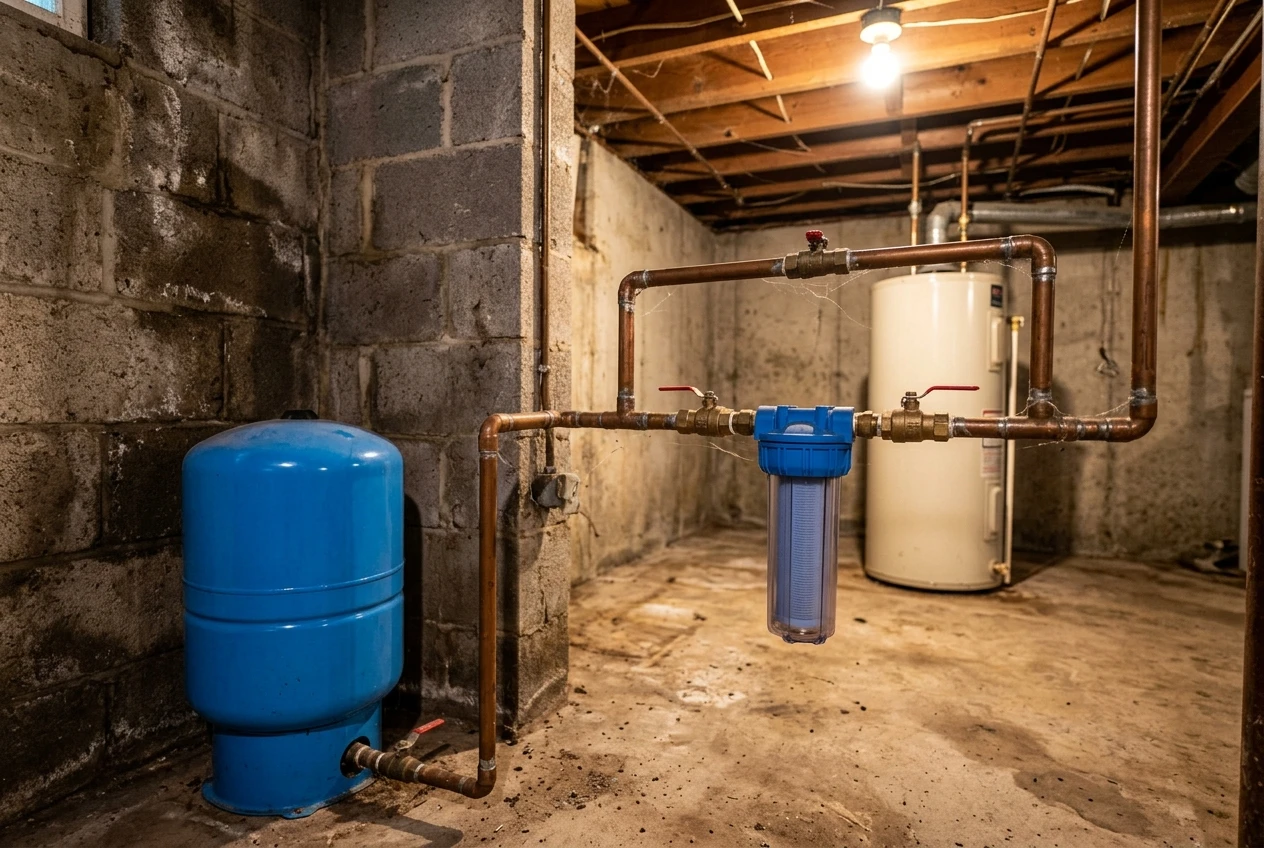
A typical order looks like this:
- Well pump and pressure tank
- Sediment filter (spin-down first if you have coarse grit)
- Other whole house treatment, such as an iron filter, carbon filter or softener
- Water heater and the rest of the house
Sediment going into a softener or carbon filter clogs those units and shortens their life, which is why the sediment filter belongs ahead of them. If you are working out the order with a softener specifically, our guide on whether to install a water filter before or after the softener covers it.
A few practical points for the install:
- Install shutoff valves on both sides of the filter so you can service it without draining the house.
- A bypass valve lets you keep water running while you change the filter.
- Pressure gauges before and after the filter show when it is clogging, because the difference between them grows as it fills.
- Mount the housing where you can reach it and have room to unscrew the sump below it.
- Follow local plumbing codes. If you are not comfortable cutting into the main line, hire a plumber.
An outdoor spigot or a single kitchen faucet filter treats only that point. For sediment, the whole house position is the one that protects your plumbing.
How often does a sediment filter need to be changed or flushed?
Change or flush a sediment filter when it shows signs of clogging, not on a fixed calendar, because the right interval depends on how much sediment your water carries. The manufacturer’s guidance for your specific filter is the starting point.
Signs that the filter needs attention:
- Water pressure drops through the house or at the farthest fixtures.
- The pressure gauge on the inlet side reads much higher than the outlet side.
- Cloudiness, grit or discoloration comes back at the tap.
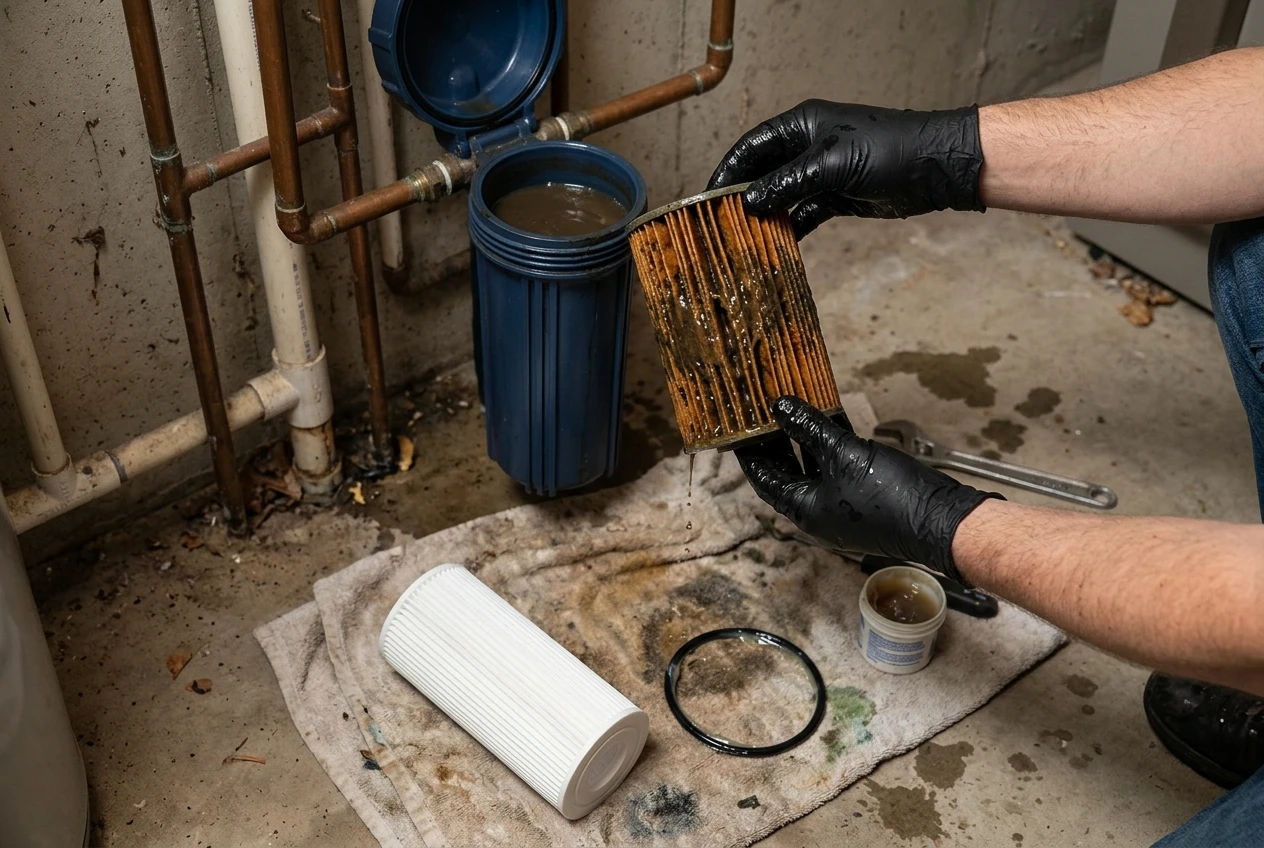
- The cartridge looks dark, stained or slimy when you pull it out.
For spin-down filters, flush the chamber regularly by opening the valve until the water runs clear. How often depends on how much grit arrives, and you will learn the pattern quickly by checking how much material comes out. Backwashing filters run on a set schedule, so confirm the timing and the drain still work, especially after a power outage.
Check a new cartridge after the first couple of weeks. If it clogs fast, that tells you the sediment load is higher than expected, and a coarser first-stage filter or a spin-down unit ahead of it will extend its life. If it clogs very fast or the grit does not let up, that is the cue to have the well inspected.
When you change a cartridge, rinse the housing, check the O-ring for damage and lubricate it with a lubricant safe for drinking water. A pinched or dry O-ring is a common cause of leaks around the housing.
When is cloudy water a reason to test before you filter?
Cloudy water is a reason to test first whenever the cause is unclear, the change was sudden, or there are signs of contamination beyond particles. A sediment filter only catches particles. It does not remove bacteria, nitrates, dissolved metals, pesticides or other dissolved contaminants, and clear water is not proof that water is safe.
Test before you buy equipment if any of these apply:
- The water turned cloudy, discolored or foul after a flood, heavy rain, nearby construction or work on the well.
- The water has a new taste or smell, or someone in the household has had unexplained stomach illness.
- The well is near a septic system, livestock, fertilized fields or other possible sources of contamination.
- The cloudiness does not settle in the glass test.
- You have never had the water tested, or it has been a long time since the last test.
Use a state-certified laboratory or your local health department, which can often tell you which tests suit your area. A test also saves money. It tells you what to buy, and it keeps you from putting a filter on a water supply that needs disinfection or other treatment first.
If the test finds bacteria, do not rely on a sediment filter, and ask the lab or health department how to disinfect the well and what to do in the meantime.
What should go in after the sediment filter?
What comes after the sediment filter depends on what your water test shows, since removing particles does not address dissolved contaminants.
Common next stages include:
- A carbon filter for taste, odor and certain chemicals.
- An iron or manganese filter if the test shows dissolved iron or manganese that turns rusty on contact with air.
- A water softener if the problem is hardness. Our guide to how to treat hard water from a well starts with the water test and walks through the options.
- Disinfection, such as UV treatment, if the test shows microbial contamination.
Sediment removal comes first because it protects each of these stages from clogging, so the work you do now carries through to every later step.
Ready to pick equipment? Compare options on our Whole House Water Filters page.