
How to Remove Iron from Well Water: Match the Type of Iron to the Right Treatment
To remove iron from well water, first identify which type you have: dissolved iron, particulate iron, or iron bacteria. Then test the water and match the treatment to the result. Sediment filters catch particles, softeners or oxidizing filters handle dissolved iron, and bacteria usually need well disinfection plus ongoing treatment.
This article covers whole-house treatment for a private well. Filtering at a single kitchen tap is a different job, and it comes up near the end.
What are the signs of iron in your well water?
The most common signs are orange or rust-colored stains on sinks, tubs, toilets, laundry, and dishes, plus a metallic taste in the water. Iron can also leave reddish-brown sediment in the bottom of a toilet tank or a glass, and it can darken tea, coffee, and cooked vegetables.
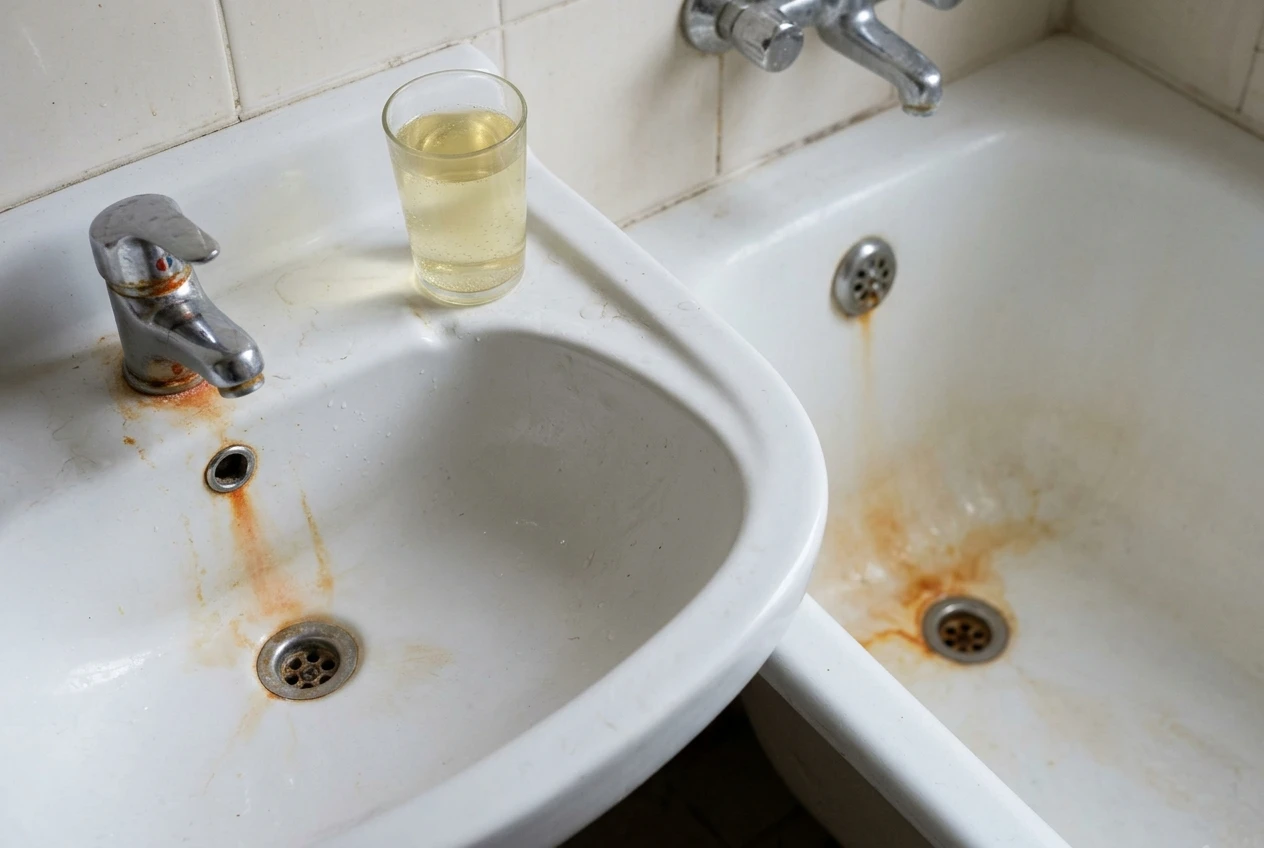
What you see at the tap and on fixtures also hints at which type of iron you have:
- Water that runs clear, then turns cloudy, yellow, or orange after standing: this usually points to dissolved iron that reacts with air.
- Water that is already orange, brown, or full of reddish flecks when it leaves the tap: this usually points to particulate iron, meaning iron that has already formed solid particles.
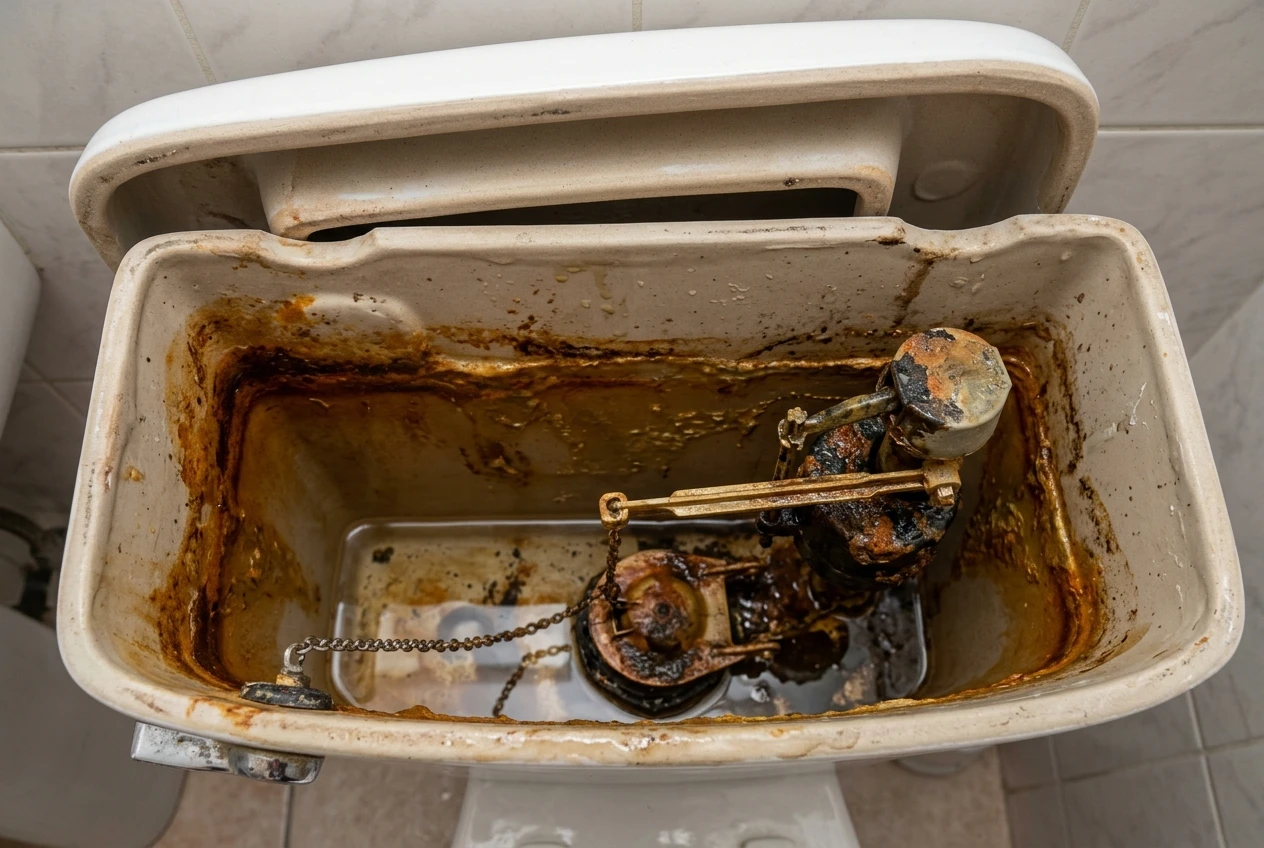
- Slimy orange, brown, or reddish deposits in the toilet tank, and a musty or swampy smell: this suggests iron bacteria.
These are clues, not a diagnosis. Staining can also come from old rusty pipes in the house, from a corroding tank, or from manganese. A water test settles it, and that comes before any purchase.
Why does the type of iron change which treatment works?
Each type of iron behaves differently in water, so each one needs a different way of getting it out. A filter that works well on one type can be close to useless on another, which is the usual reason homeowners buy the wrong equipment.
Dissolved iron (often called ferrous iron) is mixed into the water the way sugar is mixed into tea. A sediment filter lets it pass straight through, because there is nothing solid to catch. Dissolved iron has to be either exchanged out of the water, as in a water softener, or converted into solid particles first and then filtered.
Particulate iron (often called ferric iron) is already solid. It shows up as rust-colored water or visible specks. A filter that physically traps particles can handle it, though heavy loads clog the filter quickly.
Iron bacteria are living organisms that feed on iron and leave slimy, rust-colored films. They are a biological problem as much as a chemical one. Removing the iron without addressing the bacteria means the slime and the smell tend to return.
Many wells carry a mix. Dissolved iron that meets air in a pressure tank or in plumbing can turn into particles, so you can have two types at once. That is another reason to test before you shop.
How do you test your well water for iron before you buy anything?
Start with a simple observation, then confirm with a lab test. The order below keeps you from paying for equipment based on a guess.

- Run the jar check. Fill a clear glass straight from an outdoor spigot or a tap ahead of any treatment, and note the color. Set it on a counter and look again after several hours. Water that starts clear and turns orange suggests dissolved iron. Water that starts orange and settles into a layer of sediment suggests particulate iron.
- Look at the slime. Check the inside of the toilet tank and any place where water sits. Slippery rust-colored films point toward iron bacteria.
- Collect a sample for a certified lab. Ask the lab or your local health department about sampling instructions, since the way you collect the sample affects the result. Take it from a point before any existing softener or filter.
- Ask for more than iron. Hardness, pH, manganese, hydrogen sulfide (the rotten-egg smell), and tannins all affect which system will work. Ask whether the lab can report dissolved versus particulate iron, and whether it can test for iron bacteria.
- Compare the results to the equipment’s rated limits. Every system has a stated range of iron it can handle. Read the manufacturer’s specifications and match them to your lab report rather than relying on a product’s general claims.
If a water treatment dealer offers a free test, it can be a useful starting point. A dealer also sells equipment, so confirm important results with an independent lab.
Which iron removal systems fit which situation?
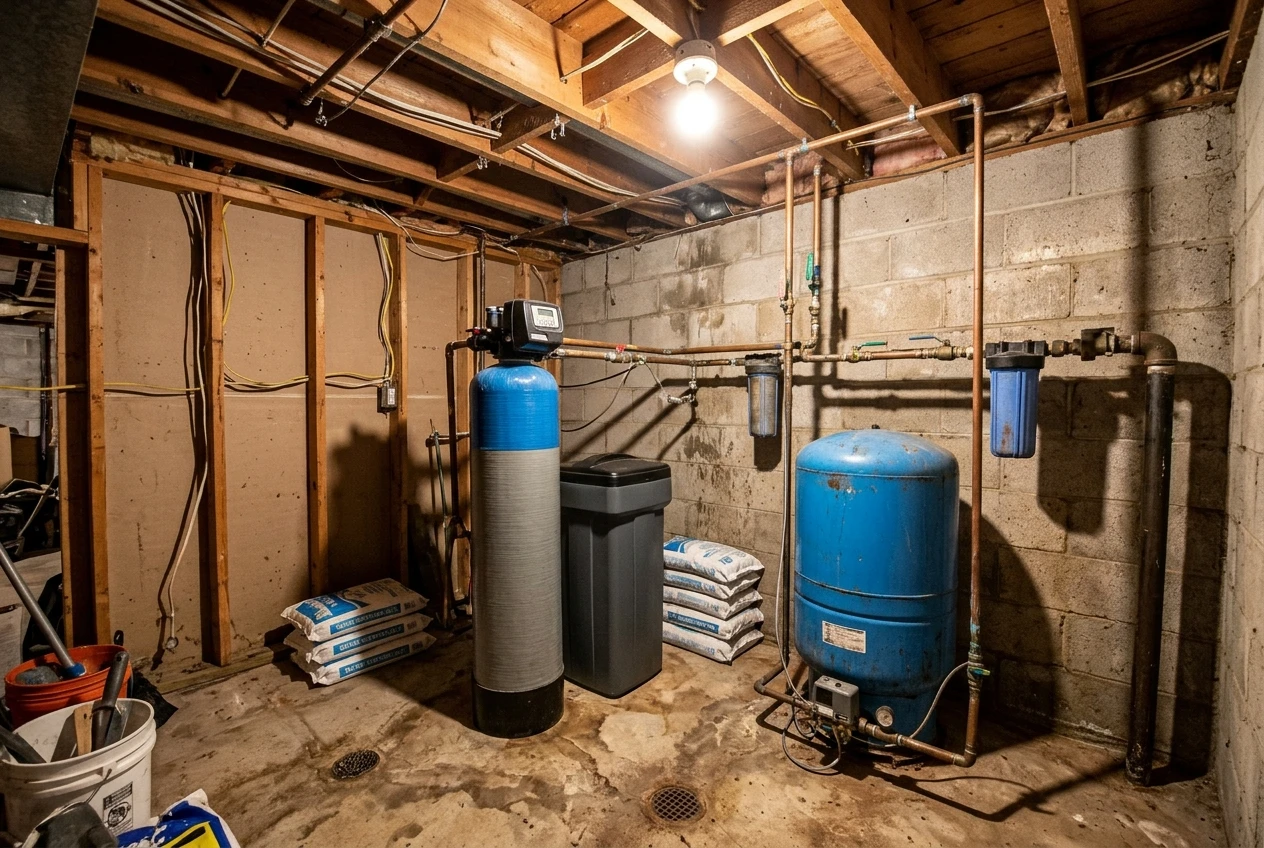
The right system depends on the type and amount of iron, plus the other things in your water. The table below pairs each situation with the treatment that generally fits. Confirm the details against your lab results and the manufacturer’s specifications.
Situation | Treatment that generally fits | What to know |
|---|---|---|
Particulate iron only, water orange at the tap | Sediment filter, or a backwashing filter | Cartridges clog and need regular replacement; backwashing units clean themselves |
Dissolved iron at low levels, with hard water | Water softener | Exchanges the iron out of the water, and can foul if iron is too high for the unit |
Dissolved iron at moderate levels | Oxidizing filter (media that converts iron to particles and traps them) | Often sensitive to pH and other water chemistry; backwashes to clean itself |
Dissolved iron, possibly with manganese or hydrogen sulfide | Air injection oxidation system | Uses air to oxidize iron, then filters it out, with no chemical to refill |
Higher iron levels, or iron plus bacteria or sulfur | Chemical oxidation, such as chlorine injection, followed by a filter | Needs a feed pump and a supply of chemical, and often a carbon filter after it to remove leftover chlorine |
A few practical points apply across these options.
Softeners remove some iron, not all of it. A softener can take out small amounts of dissolved iron as a side benefit of removing hardness. When the iron level is high, the iron can coat the resin and shorten its life. Treat a softener as a good fit when iron is low and hardness is the main complaint.
Oxidizing filters depend on your chemistry. These filters work by converting dissolved iron into particles and trapping them in a bed of media. Their performance often depends on the water’s pH and on how the media is regenerated or cleaned, so the lab report matters here.
Air injection suits wells with several problems at once. Because it adds air instead of a chemical, it is a common choice when iron comes with hydrogen sulfide or manganese. It still needs adequate flow and proper setup, so ask an installer to size it to your well and household.
Chemical oxidation handles the toughest water but needs upkeep. Injecting chlorine or a similar oxidizer works on higher iron and on bacteria, at the cost of a feed system you must keep supplied and checked.
Whichever you choose, ask for the system’s rated iron capacity in writing and compare it to your own number from the lab.
What does iron bacteria change about the fix?
Iron bacteria change the fix because the organisms live in the well, the pump, and the pipes, so treating only the water leaving the tap leaves the source in place. The slime they produce can clog screens, fixtures, and filters, and it can foul treatment equipment that would otherwise work well.
The usual approach has two parts:
- Disinfect the well and plumbing. This is commonly done by shock chlorination, in which a strong chlorine solution is circulated through the well and household plumbing and then flushed out. The procedure has safety and disposal considerations, and a licensed well contractor can do it correctly or advise on doing it yourself.
- Add ongoing treatment if the bacteria return. Bacteria often come back after a single shock treatment, especially if the well is a good environment for them. Continuous chemical feed followed by a filter is a common long-term answer.
A lab test or a contractor’s inspection helps confirm bacteria before you commit to either step. Because bacteria can clog and corrode equipment, also check that any system you buy is suited to water that contains them. Many media filters are not.
If your water smells strongly of sulfur or the problem appeared suddenly, mention that to the lab or contractor. It can affect which tests to run and what treatment to choose.
Can a kitchen filter handle iron, or do you need a whole-house system?
For iron that stains fixtures, laundry, and dishes throughout the house, you need a whole-house system installed where water enters the plumbing. A countertop or under-sink filter treats one tap and nothing else, so showers, toilets, the washing machine, and the water heater continue receiving untreated water.
Small point-of-use filters are also easy to overwhelm. Iron at the levels that stain a whole house can clog a cartridge quickly, which means frequent replacements and weak flow at the tap.
The sensible order is to treat the iron at the point where water enters the house, then add a kitchen filter afterward if you want to improve the drinking water further. Treating iron first also protects any later filter from clogging with iron.
How do you keep an iron treatment system working?
Keeping an iron system working takes scheduled maintenance, regular testing, and attention to changes in your water. Skipping these is how a correctly chosen system ends up performing like the wrong one.
- Follow the manufacturer’s maintenance schedule. Sediment cartridges need replacing, backwashing filters need their settings checked, and softeners need salt. Chemical feed systems need their supply refilled and the pump checked.
- Re-test the water on a regular basis. Iron levels, pH, and hardness can shift over time. Test after installation to confirm the system is doing the job, then again periodically or whenever staining, taste, or smell returns.
- Watch for the warning signs. Orange stains coming back, lower water pressure, or a metallic taste can mean media is exhausted, a filter is clogged, or the settings no longer match the water.
- Check what happens downstream. Iron that gets past the system can build up in the water heater and plumbing. If staining returns after treatment, test water before and after the system to find out where it is getting through.
- Keep the well itself in good shape. If iron bacteria were the cause, ask your well contractor how often to inspect or re-disinfect the well.
Keep a record of your lab results, the system’s rated limits, and the dates you service it. When something changes, you will have the numbers needed to tell whether the water changed or the equipment did.
Where to go from here
Once the iron is under control at the house, you may want cleaner drinking water at a single tap as well. Our guide on how to choose a water filter for your kitchen walks through matching a filter to the problem in your water.